

Repercussions of the Greenland Scandal on Romania
The Greenland scandal has captured public attention and triggered a series of reactions both domestically and internationally. Although Romania is not directly involved in the territorial or political disputes in Greenland, it may feel the repercussions of this scandal through its foreign relations and strategic positioning. In the current geopolitical context, any destabilization in one area can have ramifications for other states, and Romania is no exception.
The impact on Romania can be examined from several angles. Firstly, there is a risk that international tensions may affect Romania’s standing within the alliances it is part of, such as the European Union and NATO. Any change in the balance of power or in the geopolitical strategies of these organizations can also influence Romania’s interests.
Furthermore, the scandal may affect the international perception of Romania, especially as the country seeks to strengthen its image as a reliable partner and attract foreign investments. Any association with a situation marked by instability could negatively impact economic development efforts and the attraction of investors.
Nicușor Dan’s Call and Political Reactions
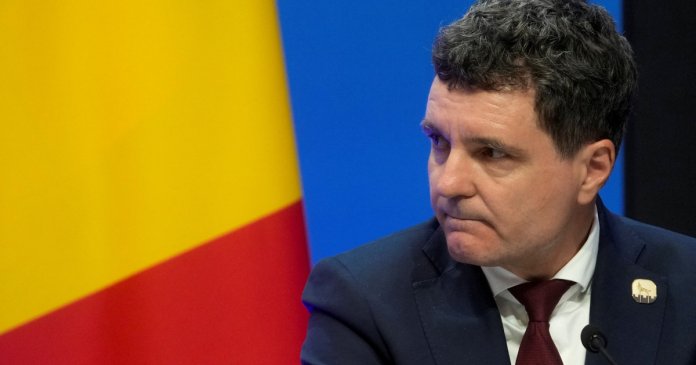
Following the emergence of the Greenland scandal, Nicușor Dan, a prominent figure in Romanian politics, issued an urgent call to the authorities in Romania to approach the situation with seriousness and promptness. In his statement, Nicușor Dan emphasized the need for an appropriate diplomatic response and requested a careful assessment of the potential implications for Romania. He highlighted that, although Romania is not directly involved in the conflict, the consequences could affect regional stability and, consequently, national interests.
Political reactions to this call appeared swiftly. Leaders from major political parties expressed diverse opinions, reflecting a wide range of perspectives on how Romania should respond. Some politicians endorsed Nicușor Dan’s position and called for an emergency session of Parliament to discuss the situation, while others criticized the call as alarmist, pointing out that there is no concrete evidence that the scandal will have a direct impact on Romania.
In this context, the Ministry of Foreign Affairs issued a statement assuring citizens that it is closely monitoring developments and will take all necessary measures to protect national interests. It was also mentioned that Romania is in contact with its international partners to coordinate a coherent response at both European and global levels.
Potential Economic and Diplomatic Consequences
The Greenland scandal could have significant economic ramifications for Romania, particularly as the country seeks to expand its trade relations and attract foreign investments. An escalation of tensions could lead to trade restrictions or changes in international economic policies, thereby affecting Romania’s exports and imports. Moreover, political instability in key regions may influence the prices of natural resources, such as oil and gas, which could directly impact the Romanian economy.
From a diplomatic perspective, Romania may need to reassess its position within international alliances. An international crisis of this magnitude can lead to strategic realignments, and Romania will have to navigate carefully to protect its national interests. Romanian diplomacy will be tested, requiring a balanced approach that maintains good relations with all international partners without compromising national security.
Additionally, the scandal could heighten pressures on Romania to take a more active role within the European Union and NATO, contributing to international mediation and stabilization efforts. This may involve a greater commitment to international missions or diplomatic initiatives aimed at reducing tensions and promoting dialogue among the involved parties.
Proposed Measures for Crisis Management
In response to the crisis triggered by the Greenland scandal, Romanian authorities have begun to devise a series of measures aimed at mitigating the impact on the country. An initial proposed step is to intensify diplomatic dialogue with Romania’s allies, especially within the European Union and NATO, to ensure effective and unified coordination of the international response. In this regard, organizing high-level emergency meetings is suggested to discuss potential scenarios and common solutions.
Domestically, it is proposed to create an interministerial working group to monitor the evolution of the situation and continually assess the risks and opportunities for Romania. This group would collaborate closely with experts in geopolitics and economics to develop adaptive strategies for the short and medium term. Additionally, strengthening cybersecurity mechanisms is recommended, considering the heightened risk of attacks in the context of an international crisis.
Regarding the economic sector, diversifying sources of supply for natural resources is proposed to reduce dependence on unstable regions and ensure the continuity of supply chains. Furthermore, stimulating economic partnerships with countries outside the conflict zone is suggested to minimize associated economic risks.
Lastly, a public information campaign is deemed essential, keeping citizens updated on the developments and the measures adopted by the authorities. Transparency and effective communication are viewed as key elements for maintaining public trust and preventing panic among the population. Through these measures, Romania aims to protect its national interests and contribute actively to the situation.
Sursa articol / foto: https://news.google.com/home?hl=ro&gl=RO&ceid=RO%3Aro